


Interethnic relations are a complex system of relationships and ways of interaction between the population, representing a diverse mixture of peoples and nations, due to similar natural and geographical conditions, common historical and cultural development of the peoples of neighboring countries. There are no countries in the world where one would have prevailed – the only ethnic group.
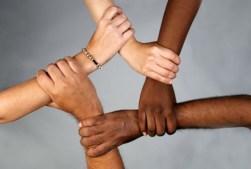
Interethnic interaction is always related to the problem of ethnic tolerance. This problem in recent years has become extremely acute in many countries of the World. For example, in Africa in several countries ethnic clashes and armed conflicts have lasted for over 20-30 years old (Kenya, Rwanda, South Africa, Nigeria and other countries)[1].
Studying the evolution of ethnic groups can understand the essence of the character and condition of the inter-ethnic relations. Standardization of interethnic relations is an extremely erroneous choice of political strategy, and the leaders of each state must understand that every ethnic group is unique, strive to preserve their language, their traditions, customs and even the conditions of its existence. Consequently, the social approach to the study of ethnic relations should be considered the most appropriate and revealing the essence of our research.
Social interpretation of inter-ethnic relations as a form of social and psychological relations, interdisciplinary approaches to the study of inter-ethnic relations used in his works Y. Harutyunyan, LM Drobizheva, AA Susokolov et al., Who laid the foundations ethnosociology and identified it as a special scientific discipline. The research “field” then focused on the features of the interaction of races and peoples.
Abroad, this line of research began to be called the sociology of race and ethnic relations. It is with the development of the sociological trend of relations between the titular nation and ethnic communities there was an urgent need to identify two levels of study: institutional and inter-group (even interpersonal).
In the first case, the government is taking measures to resolve the inter-ethnic relations at the legislative level; in the second case, inter-ethnic relations are treated as inter-group, as contacts on the level of homogeneous communities and even on the interpersonal level, ie at the micro level. After all, a collision can occur at extremely small everyday occasions or even for no reason, but they can lead to dissatisfaction with the whole community to grow to district, city, region and grow even in hostile speech, engaging in these large masses of people.
On a personal level, it depends on the individual psychological characteristics of people. Ethnic personality traits are manifested in the social and labor practices in the family, in relationships with others, your friends, determine the character and style of behavior. Interethnic relations are revealed in attitudes and orientations on inter-ethnic contacts in different spheres of cooperation, national stereotypes, in mood and behavior, and the actions of people of specific ethnic communities. Interethnic attitudes and orientations are formed in the process of socialization of the individual with family, schools, teams, in the course of a neighbor and companionship.
Psychologically dictionary gives the following definition of ethnic relations: “It is subjectively experienced relationship between people of different nationalities, ethnic communities”.[2] Such relations are developing in different spheres of life – in politics, work, life, family, friendly, informal communication. The nature of inter-ethnic relations (friendly, neutral, or conflict) develops depending on the historical past, the socio-political situation in a country, economic and cultural conditions of life, just the specific situation, interest or lack of interest in communication. In terms of active migration ethnic and inter-ethnic relations in all spheres of life: economic, political, social and spiritual.
Interethnic relations contain a rational, cognitive elements, emotional assessment and regulatory components. An extremely important role in the development of inter-ethnic relations played by national interests, perceived by the people and for each person in the national development needs. Study of interethnic relations is one of particular relevance in a country whose population is characterized by a multi-ethnic composition.
In the approach to the study of inter-ethnic relations and ethnic psychology methods are used ethnosociology, which, in turn, can give explanations inter-ethnic relations.
One of the first gave an explanation of the concept of “ethnic psychology” M. Lazarus and X. Shteyntal[3]. According to them, ethnic psychology – is an interdisciplinary branch of knowledge that studies and develops:
- peculiarities of the psyche of people of different nations and cultures;
- features of the national character;
- the problem of national peculiarities of perception of the world;
- the problem of national peculiarities of relationships.
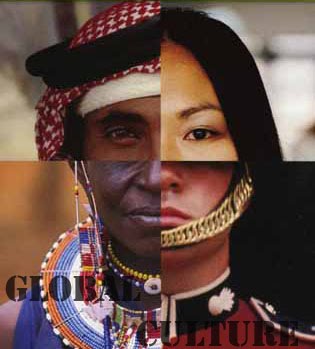
According to M and X Schteyntal Lazarus[4], properties and characteristics of the national culture constitute ethnicity (ethnic community) are not the same individuals, between cultural and psychological areas ethnopsychology always there are certain differences.
Abstract and unfounded conclusions about the psychological peculiarities of the peoples are capable of offending the national feelings. It remains an acute problem of reliability tests and experimental procedures used in the study of ethnic communities.
The development of ethnic psychology issues, particularly its psychological aspect is important for inter-ethnic relations. Ethno-psychology focuses on the study of the psychological causes of ethnic conflicts, the search for effective ways to resolve them, revealing the origins of national consciousness and development in its different social and national environments.
The one-sided approach to inter-ethnic relations is incorrect but the psychology of personality, it is necessary to take into account the social environment, as many conflicts become social in nature, so it is important to study the social processes and manifestations in different ethnic environments, ethnic processes – in different social groups.
Ethnic Sociology – one of the areas in sociology, including family sociology, rural sociology, and others.
The subject was the study of ethno social aspects of development, the functioning of ethnic groups, their identities, interests and forms of self-organization, collective patterns of their behavior, interaction of ethnic groups, the individual relationships, is included in these groups, and the social environment.
We call the most relevant topics developed by Ethnosociologists[5]:
- the impact of national factors on the social structure of the population and migration;
- rational distribution of labor resources with regard to their ethnicity;
- social determinism of national identity and its influence on international relations;
- inter-ethnic conflicts;
- national features of valuable orientations, behavioral, cultural interests and needs of social groups;
The most closely converging interests of ethnosociologists and ethnopsychologists working in line with ethnosociology[6]. In the study of inter-ethnic relations and ethnosociologists and ethnic psychology focus on human perceptions of their own and the other group, its perception and readiness for contacts with others. However, in the study of ethno-ethnic relations in the spotlight is the behavior of people of different nationalities in the sphere of interethnic interactions. Psychological patterns for them are important, but it is – one of the factors influencing the behavior of the group[7]. The behavior of people ethnosociologists consider not only through the actions and facts, but also through the consciousness, perception of reality, reflecting the views, attitudes, orientations and values of their own ethnic group.
Personality in inter-ethnic relations has a special place, because the cell of any ethnic group is the personality, its character. The problem of personality psychology research based largely on the provisions of the philosophy of Aristotle, which determines what content, is embedded in this concept and which side the person – social, personal, rational or ethical – is leading.
Ethnopsychologists are primarily interested in questions of personality structure, driving forces and mechanisms of its development. These problems are put forward in the center of attention of most researchers. Sigmund Freud believed that the psyche consists of three layers – the conscious, preconscious and unconscious, and which are the main structure of the person. The contents of the unconscious, in Freud’s view, [8] the realization of virtually inaccessible under any circumstances. The content of the preconscious layer can be realized by the man himself, although it requires considerable effort from him.Moreover, theory of personality, and the theory of social attitudes to help understand the mechanisms of action of the factors affecting the inter-ethnic relations. It is obvious that the formation of personality, attitudes and orientations happening in socialization process, starting with the education in the family and then under the influence of a wide range of circumstances. Therefore, there is a national identity card, included in a specific ethnic community.
Considering the origins of national consciousness, it is necessary to bear in mind that all of the threads that go to the roots, are organically linked with ethnicity.
Thus, inter-ethnic relations are one of the most important spheres of society. They are extremely difficult to manage and very difficult to predict their formation and development. Some philosophical concepts of the late XIX century., For example Marxism, it was assumed that eventually will be neutralized ethnicity, differences between the ethnic groups will gradually fade. The real course of historical process has not confirmed these assumptions. In contrast, the second half of the twentieth century. in all over the world marked the rapid growth of ethnic consciousness.
Well, we examined the features of studying inter-ethnic relations and different disciplines have revealed that the most similar approaches are ethnosociology and ethnic psychology. Specificity study of inter-ethnic relations within ethnosociology is that they are interested in not only relations between members of different nations and ethnic groups, but also the behavior of the real facts.
We also discussed the methodology of the study of inter-ethnic relations, and characterize a number of theories, by which considers interethnic interaction. These include subjects such as ethno and ethnic psychology, theory of personality and national identity. In addition to a full-fledged study of inter-ethnic relations, special attention should be paid to the identity, included in an ethnic group, a hierarchy of activities motivated by personal needs, attitudes, orientations, ethnic stereotypes, national identity, ethnic boundaries, social and cultural distance, ethnic status.
Bibliography:
[1] Anaïd Flesken. Researching Ethnic Relations as the Outcome of Political Processes. – Leibniz.: Published: GIGA 2014. №250
[2] Психологический словарь. Раздел о межэтнических отношениях. http://psychology.net.ru/dictionaries/psy.htm
[3] Каргин Н.Н. Этнопсихология. М. 2009 г. С. 29-30.
[4] Шпет Г.Г. Введение в этническую психологию. – Воронеж: Институт практической психологии, 1996.
[5] Нельга А. Этническая социология как наука. – Киев: Институт философии НАН Украины, 2010.
[6] Стефаненко Т.Г. Этнопсихология. 3-е изд.- М.: «Аспект Пресс», 2004.
[7] Вундт В. Проблемы психологии народов. – М.: Издательство КСП, 1998.
[8] Freud S. Messen psychologie und Ich- Analyse. Die Zukunft einer illusion. – Frankfurt, 1978.

 Politics/Conflictology/International Relation